Cart
0
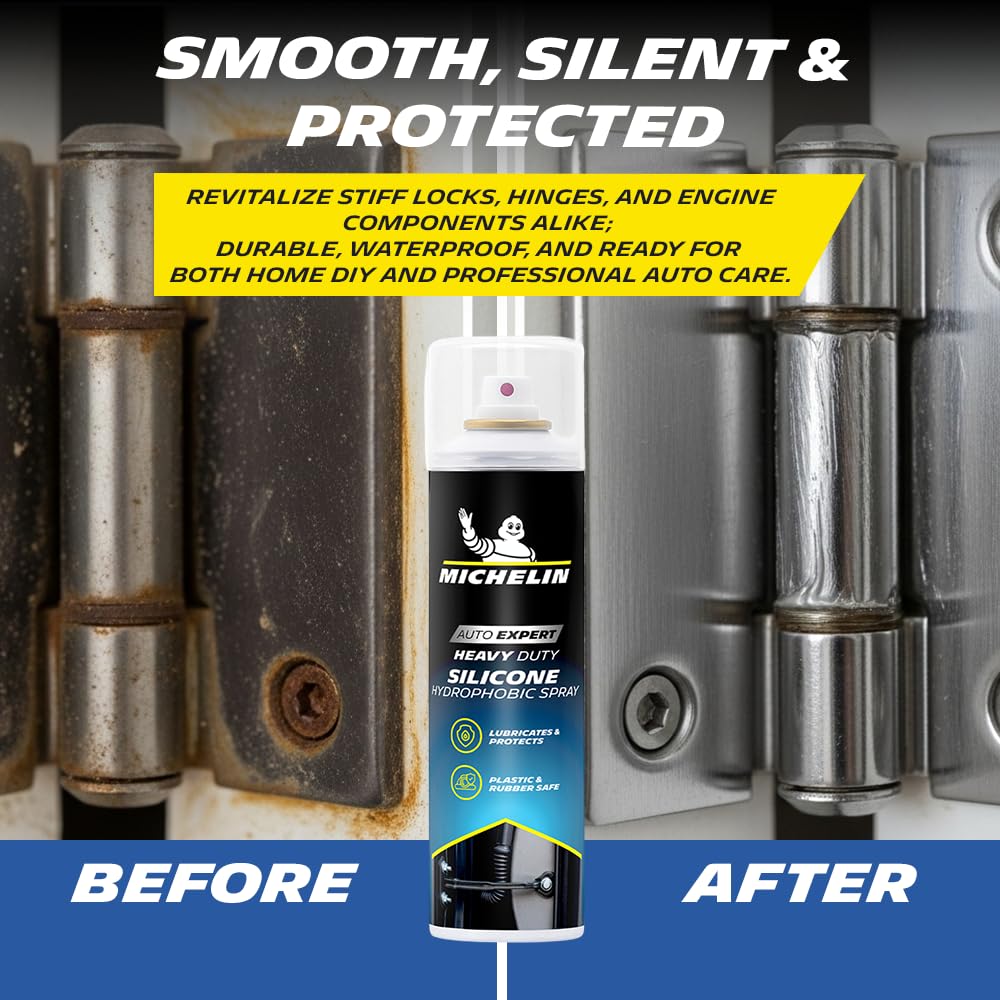
Every car develops a set of small, irritating faults that never quite justify a workshop visit. A door that squeaks. A window that crawls up its channel. A lock that resists the key. Rubber door seals that have gone chalky and grey. A boot hinge that groans every time you open it.
Almost all of them come down to the same two causes — friction and dried-out rubber — and almost all of them are fixed with a spray and five minutes.
Why rubber and plastic fail first in India
Heat and UV are the culprits. Rubber seals, window channels and plastic trim contain plasticisers that keep the material soft and flexible. Sustained high temperatures and direct sun drive those plasticisers out. The rubber shrinks slightly, hardens, goes grey and eventually cracks.
That progression causes more than cosmetic damage. Hardened door seals stop compressing properly, which lets in water and wind noise. A dried window channel grips the glass and puts load on the regulator motor — one of the more expensive small failures on a modern car. Perished boot and bonnet seals let dust into places dust should not reach.
Treating rubber before it hardens is cheap. Replacing a set of door seals is not.
What a silicone spray actually does
Silicone lubricant leaves a thin, slippery film that stays put on rubber and plastic, repels water, and doesn't attract dust the way an oil-based lubricant does. That last point matters in Indian conditions — an oily lubricant on a door hinge becomes a grit magnet, and the grit turns the lubricant into a grinding paste.
The MICHELIN Multipurpose Silicone Spray (500 ml) is built for this. It lubricates, protects and rejuvenates rubber, plastic, vinyl and metal; forms a water-repellent coating that helps prevent rust and corrosion; and restores shine and flexibility to dull trim and rubber seals, helping prevent drying, cracking and hardening.
Where to use it on a car
- Door and boot rubber seals — the highest-value application. Wipe the seal clean, apply, spread evenly with a cloth. Also stops doors sticking to seals in cold weather.
- Window channels — the rubber runners the glass slides in. Fixes slow or juddering windows and takes load off the regulator.
- Door hinges and check straps — the squeak and the clunk when a door opens.
- Bonnet and boot hinges and latches.
- Sunroof rails and seals, where fitted.
- Dashboard and interior trim — restores flexibility to plastics. Apply to a cloth, never spray directly, and keep it off the steering wheel, pedals and any surface you grip.
It works beyond the car too — window and sliding-door tracks at home, treadmill belts, bicycle and motorcycle chains, squeaking hinges, and tool maintenance.
Where silicone is the wrong choice
Two things worth knowing, because misuse is common.
Never use silicone spray on brake components. Any lubricant on a braking surface is dangerous. This should be obvious and it still happens.
Don't use it on surfaces you intend to paint or glue. Silicone is notoriously difficult to remove completely, and paint will not adhere over it. If a panel is going to be repainted, keep silicone well away.
Also keep it off the driver's contact points. A silicone-treated steering wheel or pedal is genuinely hazardous.
The other spray: multipurpose penetrating lubricant
Silicone is for rubber, plastic and smooth running. A penetrating multipurpose spray does a different job — freeing seized fasteners, displacing moisture, cleaning off residue and protecting bare metal.
The MICHELIN ML40 Multipurpose Spray (400 ml) covers that category. Typical uses:
- Rusted or seized bolts and nuts — spray, wait, then apply force. The waiting is the part people skip; give it several minutes to penetrate.
- Displacing moisture from electrical connections and damp ignition components.
- Removing adhesive residue, sticker gum and tar spots from metal.
- Protecting exposed metal parts and tools against surface rust.
- Freeing stiff locks, latches and mechanisms.
The distinction is worth remembering: penetrating spray to free something that's stuck or corroded, silicone spray to keep rubber and plastic soft and moving. Using the penetrating spray as a long-term rubber conditioner is a mistake — it can dry rubber out over time, which is the opposite of what you want on a door seal.
A simple maintenance routine
Twice a year is enough for most cars, and pre-monsoon and post-monsoon are the natural points.
- Wipe down all door, boot and bonnet rubber seals with a damp microfibre and let them dry.
- Apply silicone spray to a cloth and work it along every seal.
- Spray the window channels lightly and run each window up and down a few times to distribute it.
- Treat door hinges, check straps, boot and bonnet hinges, and the fuel flap.
- Check locks and latches; free anything stiff with the penetrating spray.
Fifteen minutes, twice a year. It's the least glamorous maintenance you can do and it prevents some of the most annoying failures a car develops.
Application basics
Shake the can before use. Work in a ventilated space. Apply to a cloth rather than spraying directly whenever you're working near paint, glass or interior surfaces — overspray on glass causes smearing that takes real effort to remove. Wipe away any excess; a thin even film performs better than a heavy wet coat, and a heavy coat just collects dust.
The short version
- Heat and UV harden rubber seals and plastic trim — treat them before they crack, not after.
- Silicone spray for rubber, plastic, window channels, hinges and trim.
- Penetrating spray for seized bolts, moisture displacement, residue and rust protection.
- Never on brakes, never on surfaces to be painted, never on the steering wheel or pedals.
- Apply to a cloth near paint and glass; thin coats beat heavy ones.
- Twice a year, pre- and post-monsoon, is enough.
Michelin car care products in India are supplied by Axon Lifestyle, the official Michelin Lifestyle licensee. Explore the multipurpose aerosol range or the full Michelin car care range in India.